I was in England for several weeks in September and October, researching my next book, when I came across something quite interesting in the archives of the Royal Astronomical Society in London—specifically in their material relating to astronomer and polymath John Herschel (1792-1871). (Without giving too much away, my book will involve several key figures from 19th century science, Herschel among them.)
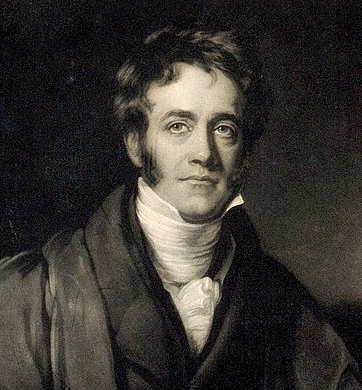
The astronomer and polymath John Herschel (1792-1871)
John Herschel was the son of astronomer William Herschel, who discovered the planet Uranus and mapped the northern sky, and was the nephew of astronomer and comet hunter Caroline Herschel. John followed in their footsteps by travelling to what is now South Africa and mapping the southern sky from his observatory near Cape Town, in the 1830s. Luckily for historians, we have vast troves of Herschel’s letters and notebooks, including his observation logs—hefty books containing the results of his “sweeps,” as he called them (observations made as he swept his telescope from one part of the sky to the next), and many of these have found a permanent home in the RAS library. (Other Herschel material can be found a few blocks away at the Royal Society, and in various other archives around the world.)
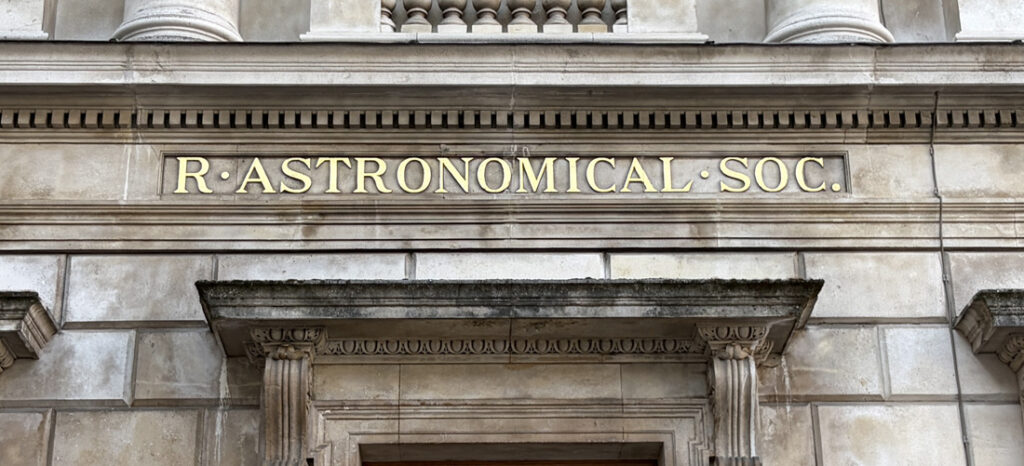
The entrance to the Royal Astronomical Society, in the Burlington Arcade in London
We also have various odd scraps of paper on which Herschel carried out his calculations. (He clearly used whatever paper happened to be within reach—the phrase “back of the envelope calculation” comes to mind.) With assorted papers crammed into Herschel’s log books, you never know what you might find—and so, wedged into Volume Two of his “Cape Sweeps,” I came across an intriguing sheet of paper: One side was, of course, covered with calculations; the other side turned out to be a letter addressed to “Sir John” from someone named James Hayler. The letter offers some insight into Herschel’s personality.
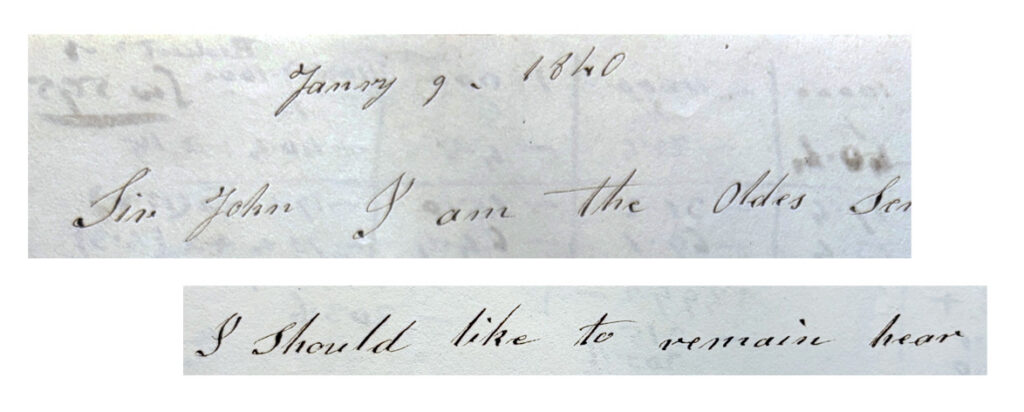
A portion of the letter from James Hayler to William Herschel
The letter, penned by a local farm worker, is dated January 9, 1840—about a year and a half after the Herschels returned from the Cape. John and his wife Margaret and their growing family were living in Slough, west of London, but were making plans to move to a more secluded location in rural Kent. Herschel had his eyes on a mansion called Moor House, near the village of Hawkhurst, some 50 km southeast of London.
The most recent occupants of the house had been the widow and daughter of Lord Cuthbert Collingwood, a decorated naval officer and Nelson’s deputy at the Battle of Trafalgar. Soon after moving in, Herschel would rename the house Collingwood House.
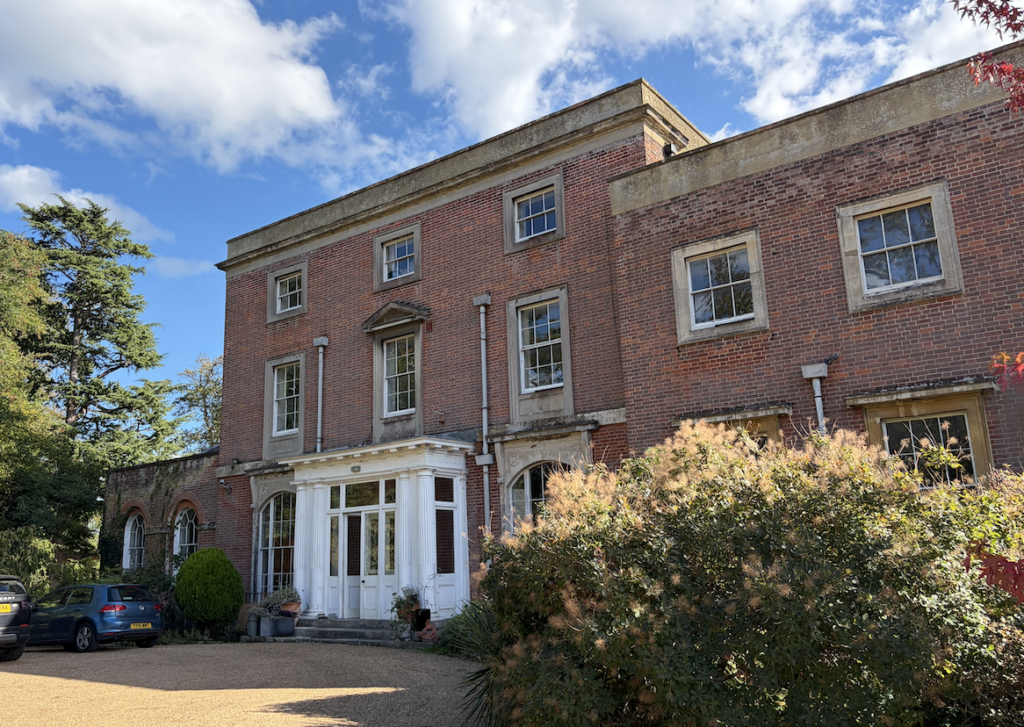
Collingwood house today
The farm worker was named James Hayler. He says that he was the “oldest servant” employed by “Sqr. [Squire] Gregson and Mrs. Collingwood” (Gregson presumably referring to Jesse Gregson, who had built the house but had by now passed away). He says he’s been living in the “Darry” [dairy] house, where he “had the Care of Darry and Poultry.” But the Collingwood family had moved out, and could therefore no longer employ him, and Hayler says the local bailiff had told him he had to move out by March. But knowing that Herschel will soon be moving in, he writes to the estate’s soon-to-be owner, asking “if you have not got a servant to bring with you I should like to remain here as we are, if it is agreeable with you.” He asks if Herschel has any “employ” (he spells it “im Ploy”) for him. In other words, James’s ability to keep his modest home on the estate was tied to his employment, so if he lost his job, he would be homeless—and so he appealed to Herschel, the new owner, for help.
The good news is that it appears to have worked. When I showed the letter to RAS archivist Kate Bond, she embarked on some electronic sleuthing and soon found evidence that Herschel did indeed hire Hayler: His name turns up on an 1841 census indicating that he was still living in Hawkhurst at that time. The census lists his age as 60, making him one of the oldest people in the town, apparently with a wife named Ann and a 25-year-old son named Henry (which explains the “we” in the letter).
This act of good will on Herschel’s part “demonstrates how kind, considerate and caring John was as a person, to people who were in distress,” says Bond. She notes that the history of astronomy is littered with tales of grumpy or cantankerous scientists, but, by all accounts, John Herschel was different. “There are all these stories of astronomers falling out with each other—but I haven’t heard a story like that about John,” she says. “That might be why he was so successful—he was really good with people.”
And what of the calculations on the other side of the page? In the top-right corner Herschel scribbled “Reduction of Sweep 595”—the term “reduction” referring to the laborious mathematical calculations used to convert raw astronomical data into a standardized form fit for publication. And sure enough, that side of the paper is covered top to bottom with sums and equations.
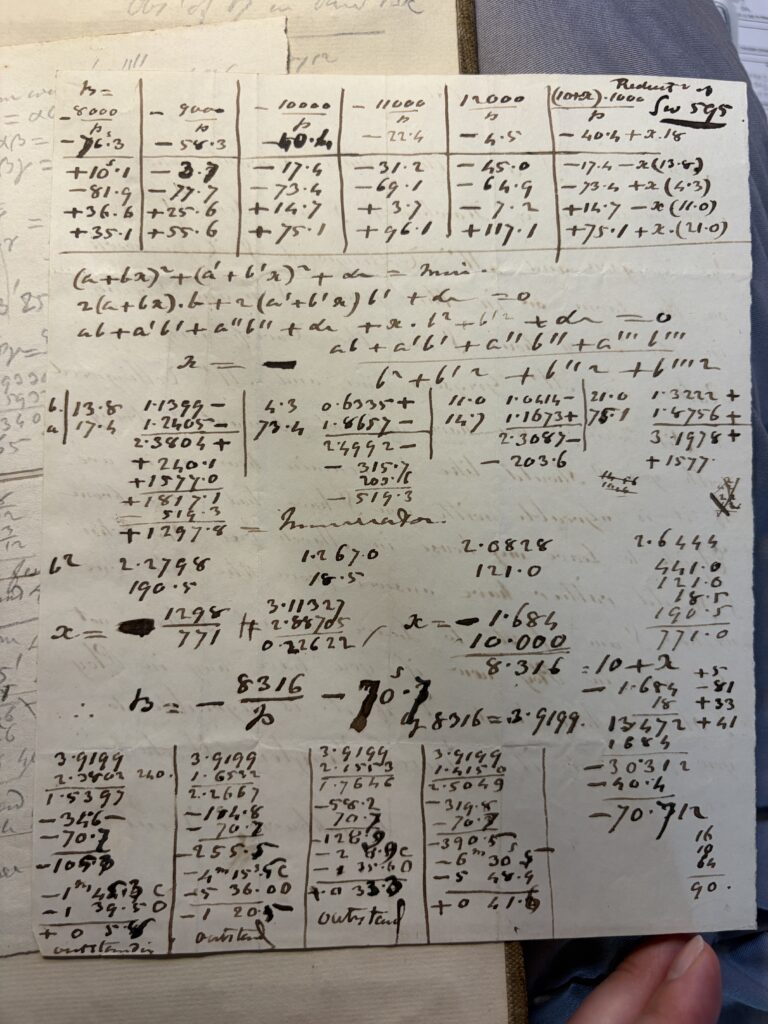
Herschel used the back of James Hayler’s letter for his calculations
And it was for those equations, not the farm worker’s letter, that the paper was saved—so it’s a matter of sheer luck that we have this intriguing glimpse into 19th-century life in rural England—and, it seems, evidence of John Herschel’s generous disposition.
With many thanks to Kate Bond, Assistant Archivist, Royal Astronomical Society.